
GNSS Systems

BRx7+ GNSS Receiver
The BRx7 is Carlson’s all-new multi-GNSS, multifrequency smart antenna. It provides robust performance and high precision in a compact and rugged package. With Athena, the BRx7 provides state-of-the-art RTK performance when receiving corrections from either a static base station or network RTK correction service. With multiple connectivity options, the BRx7 allows for RTK corrections to be received over radio, cell modem, Wi-Fi, Bluetooth, or serial connection. With a fully integrated IMU sensor, the BRx7 can compensate for tilt at angles of up to 60o.
The BRx7 delivers centimetre-level accuracy with virtually instantaneous initialization times and cutting-edge robustness in challenging environments.

Carlson RT5/RTK5
The Carlson RT5 ruggedized Windows data collector. Designed for surveying, stake-out, construction layout and GIS mapping, the RTk5 is bundled with Carlson SurvPC, Carlson’s Windows based data collection program.
The Carlson RTk5 also includes an advanced GNSS solution, allowing new levels of freedom and accuracy in a compact, light, versatile package. The Carlson RTk5 comes with a custom-built pole and cradle, a survey-grade antenna, a small portable helix antenna for handheld GNSS use, and provides a light, versatile, all-in-one solution for land surveyors, engineers, GIS professionals, and anyone else in need of advanced GNSS positioning with an RTK rover.

Carlson LISTEN-LISTEN
Have you ever been out on site with your GPS base and rover and either you keep getting interference on your UHF frequency, or you go behind a building and you lose the signal altogether? Frustrating isn’t it. With this in mind, Carlson has introduced Carlson Listen-Listen in their latest versions of SurvCE and SurvPC field software. How does it work? Well, basically you set up your base station using a unique Carlson port number. If you have internet access use it but if not use a GSM modem to send the correction data via Carlson Listen-Listen. At the rover, you use SurvCE to Listen to the next port number up, i.e. if the base is port number 1234 the rovers will all be port number 1235. You can use as many rovers as you wish to connect to the base. Other key benefits are that you are not limited to line of sight range, and there is no reduction in accuracy.

Juniper Geode GNS3 GNSS receiver
Scalable real time GNSS receiver.
A simple scalable sub meter DGPS to centimetre RTK receiver. Small and light weight, easy to use with 12+ hours battery life.
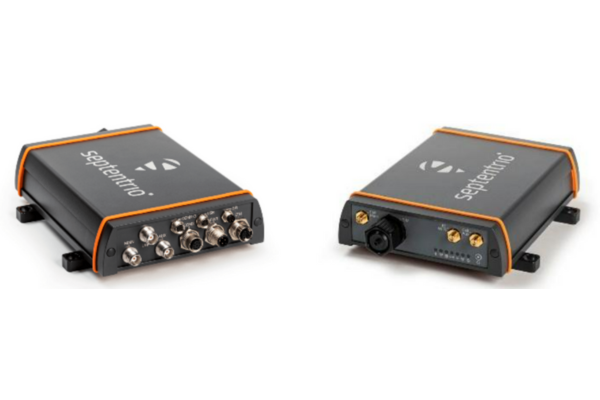
Septentrio AsteRx-U3
Multi-constellation, dual-antenna GNSS receiver.
Full-constellation, triple-frequency satellite tracking on both antennas. Best-in-class RTK performance. Sub-degree GNSS heading & pitch or heading & roll. Integrated UHF radio, cellular modem, Bluetooth and Wi-Fi (depending on configuration). Anti-jamming and anti-spoofing protection with AIM+.
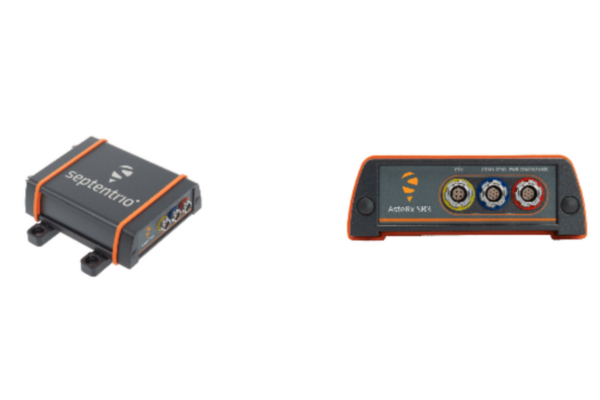
Septentrio AsteRx SB3 Pro+
Advanced housed GNSS positioning and heading receiver.
Flexibility to be used either as a rover or a base station. All-in-view triple-band satellite tracking for reliable RTK positioning accuracy(cm-level). Triple-band GNSS heading available directly from initialization, removes reliance on vehicle dynamics or magnetic sensor. Advanced anti-jamming as part of GNSS+ Algorithms.
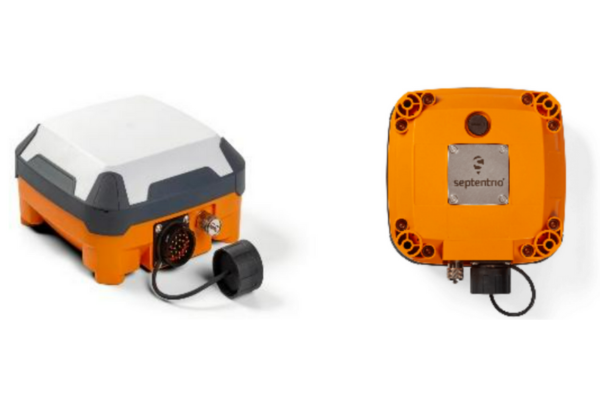
Septentrio AntaRx-Si3
Ultra-rugged inertial GNSS/INS smart antenna.
Multi-frequency IMU-enhanced RTK positioning down to centimetre level. IP69K compliant housing for the harshest environments. Robust against shocks and vibrations. Auxiliary antenna input for heading & pitch or heading & roll capability. Septentrio GNSS+ algorithms for reliable performance and tracking despite heavy vibrations. Intuitive web user interface.